Thinking about buying near the BeltLine in Ansley Park? It sounds simple at first, but this is one of those Atlanta searches where the details matter more than the label. If you want the right mix of walkability, privacy, home style, and long-term fit, understanding how BeltLine access actually works around Ansley Park can help you make a smarter decision. Let’s dive in.
BeltLine access in Ansley Park
When people say a home is “near the BeltLine” around Ansley Park, they are usually talking about the Northeast Trail. In this area, the trail runs along the eastern edge of Piedmont Park, passes Ansley Golf Club and Ansley Mall, and connects the area toward Midtown and points north.
The Atlanta BeltLine describes the full system as a 22-mile loop connecting 45 neighborhoods. For buyers focused on Ansley Park, the more immediate question is not the full loop. It is how easily you can reach the Northeast Trail from the specific home you are considering.
Current project pages still show finishing work on Northeast Trail Segment 1 with an estimated completion date of fall 2026. That means it is especially important to confirm present-day access, route conditions, and the feel of the walk in person before you make assumptions based on a map.
Key access points to know
The most relevant access points around Ansley Park include:
- Piedmont Park North Woods
- Westminster Drive
- Piedmont Avenue
- Ansley Mall
- Montgomery Ferry Road
- Mayson Street
These access points can create very different day-to-day experiences depending on where a home sits. Two properties may both be marketed as BeltLine-close, but one may offer a direct, intuitive walk while another may require a longer route through interior streets or across a busier corridor.
Why the route matters
In practice, convenience is about more than straight-line distance. You want to know whether your usual path to the trail feels easy enough for regular walks, runs, or bike rides, or whether it becomes less appealing once you factor in crossings, ramps, or a less direct approach.
That is why buyers in this part of Ansley Park should think beyond the phrase “near the BeltLine.” A better question is: How usable is the access for your actual routine?
What the Northeast Trail adds
The Northeast Trail offers more than a path from point A to point B. According to the BeltLine’s trail information, this stretch includes a mix of commercial areas, quieter residential sections, and access to Piedmont Park amenities like trails, playgrounds, tennis courts, dog parks, and a swimming pool.
For many buyers, that mix is a major part of the appeal. You are not only buying proximity to a trail. You are buying easier access to park space, recreation, and a more connected intown lifestyle.
That said, not every home in Ansley Park experiences that benefit the same way. Some locations feel closely tied to that active edge, while others feel more tucked away and separate from it.
Ansley Park is not one uniform trail district
One of the biggest misconceptions buyers can have is assuming that all of Ansley Park offers the same housing type, lot pattern, or street feel. It does not. The neighborhood includes a mix of historic single-family homes and smaller attached or multi-unit options near the edges.
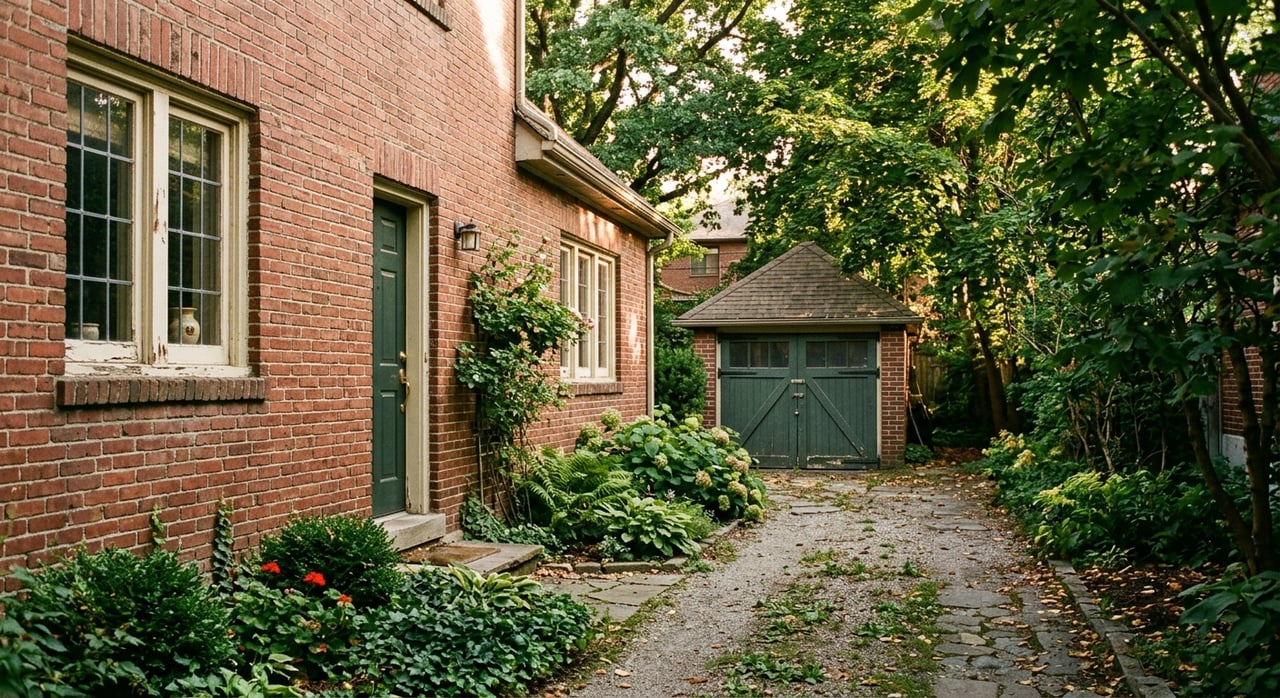
Historic records describe Ansley Park as an early 20th-century suburban residential district with eclectic period architecture, winding streets, irregular blocks, homes set back from the street, and mature tree cover. That historic framework still shapes how the neighborhood feels today.
Interior streets vs. edge locations
The City of Atlanta’s 2025 neighborhood conservation study says the interior of Ansley Park is almost entirely single-family, and the primary R-4 district requires minimum lots of 9,000 square feet. That helps explain why many interior blocks feel more spacious, with deeper setbacks and more visual separation from surrounding activity.
The same study notes multifamily areas along Piedmont Avenue NE and near major retail districts, with RG-2 and RG-3 zoning that supports apartments, condos, townhouses, and converted houses. For buyers, that means the BeltLine-adjacent edge can feel more mixed and active than the interior.
Neither setting is automatically better. It depends on whether you value faster access and a more connected feel, or more buffering, larger setbacks, and a quieter sense of retreat.
The trade-off: convenience or privacy
Around Ansley Park, BeltLine access is often a lifestyle benefit first and a product-type filter second. In other words, being close to the trail can shape how you live day to day, but it also often comes with differences in street activity, lot configuration, and privacy.
A home closer to the BeltLine edge may make it easier to get out for a morning walk or quick park visit. A home farther into the neighborhood may give you more separation from public activity, more mature landscaping between the house and the street, and a stronger sense of enclosure.
This is one reason broad neighborhood labels can only tell you so much. In Ansley Park, the block, the lot, and the route to the trail often matter more than the neighborhood name alone.
What homes near the BeltLine may cost
Ansley Park is currently positioned in the upper-luxury segment of the market. Recent public market snapshots put the neighborhood around the mid-$1.6 million range, though asking prices and sold prices vary depending on property type, scale, condition, and exact location.
Redfin reported a median sale price of about $1.6 million in March 2026. Realtor.com reported a median listing price of $1.65 million, a median sold price of $1.627 million, and about $499 per square foot as of April 2026.
Inventory remains limited. Realtor.com’s April 2026 summary showed 14 homes for sale and a median of 37 days on market.
Expect a wide price spread
One of the most useful takeaways for buyers is that there is not one single BeltLine price band in Ansley Park. Public listing snapshots have shown everything from a condo around $435,000 to a 3-bedroom house at about $1.195 million, with larger homes listed above $3.2 million.
That spread matters because BeltLine proximity alone does not set the price. Lot size, square footage, condition, architecture, and exact street position still play a major role in value.
If you are comparing homes, it helps to think in layers:
- Location within Ansley Park
- Directness of BeltLine access
- Housing type
- Lot usability and parking
- Privacy and orientation
- Level of updates or renovation
What to check during a showing
Because the differences here are so site-specific, your showing strategy should be practical and detailed. The best questions are the ones that help you understand how the home will function in everyday life, not just how it looks online.
Ask about actual BeltLine access
Do not stop at the map pin. Walk the route if possible and consider asking:
- How long is the real walk to the nearest access point?
- Which route feels most natural from this house?
- Would you realistically use that route often?
- Does the walk involve a busier crossing or a less direct path?
A home that seems close on paper may feel very different once you test the route in person.
Check parking and lot usability
In a historic neighborhood with irregular blocks and varied lot shapes, usable space matters. Ask:
- How many true off-street parking spaces are there?
- Is there space to turn around?
- Will you need to back out onto the street?
- How much of the lot is actually usable after setbacks, slope, trees, or retaining walls?
This can make a big difference in day-to-day convenience, especially if you want outdoor living space or easy guest parking.
Look closely at privacy
Privacy can shift a lot from one property to the next. During a showing, pay attention to:
- What the windows face
- Whether decks or patios overlook neighboring spaces
- How much separation exists from the street
- How close the home feels to more active corridors
Mature tree cover can be a major asset in Ansley Park, but it can also come with maintenance and drainage considerations.
Ask about future plans
If you are thinking about exterior updates, landscape changes, or additions, it is smart to ask what local zoning, conservation, or design review rules apply to that specific property. In a historic neighborhood, those details can shape what is realistic.
How to shop smarter near the BeltLine
If your goal is buying near the BeltLine around Ansley Park, the smartest approach is to define your priorities before you fall in love with a listing. For some buyers, the ideal fit means quicker trail access and easier connection to Piedmont Park. For others, it means preserving more quiet, larger setbacks, and a stronger sense of privacy.
A helpful way to narrow your search is to rank these factors in order:
- BeltLine access convenience
- Home type and architectural style
- Privacy from public activity
- Lot size and usable outdoor space
- Parking functionality
- Price and renovation needs
Once you know your priorities, it becomes easier to compare one street or property against another without getting distracted by a broad marketing label.
Why block-by-block analysis matters
Ansley Park is a neighborhood where subtle differences can have a big effect on daily life. A house near an access point may support a very different routine than one deeper into the interior, even if both share the same neighborhood identity.
That is why buying here often comes down to block-by-block analysis rather than neighborhood-level assumptions. The best purchase is usually the one that matches how you actually want to live, not just the one that sounds best in a listing description.
If you are weighing the trade-offs between BeltLine convenience, historic character, lot usability, and privacy, having neighborhood-specific guidance can make the process much clearer. When you want thoughtful, senior-led guidance on buying in Ansley Park and other intown Atlanta neighborhoods, connect with the Allie Burks Group.
FAQs
How close is Ansley Park to the Atlanta BeltLine?
- Ansley Park’s BeltLine connection is mainly tied to the Northeast Trail, which runs along the eastern edge of Piedmont Park and near areas like Ansley Mall, Montgomery Ferry Road, and Piedmont Avenue.
What BeltLine access points are most relevant for Ansley Park buyers?
- The main access points to know around Ansley Park include Piedmont Park North Woods, Westminster Drive, Piedmont Avenue, Ansley Mall, Montgomery Ferry Road, and Mayson Street.
Are all homes in Ansley Park equally close to the BeltLine?
- No. Some homes have a more direct and convenient route to the trail, while others may require a longer walk through interior streets or across busier corridors.
What types of homes can you find near the BeltLine around Ansley Park?
- Ansley Park includes historic single-family homes in much of the interior, along with condos, townhouses, apartments, and converted houses near some edge areas and major corridors.
What is the price range for homes near the BeltLine in Ansley Park?
- Recent public listing snapshots show a wide range, from a condo around $435,000 to larger homes above $3.2 million, with neighborhood median pricing around the mid-$1.6 million range in spring 2026.
What should buyers ask when touring a home near the BeltLine in Ansley Park?
- Buyers should ask about the real walking route to the trail, parking setup, lot usability, privacy from nearby activity, tree and drainage maintenance, and any property-specific zoning or design review rules for future exterior changes.